
Home Defense for Real People: What to Do When Seconds Count
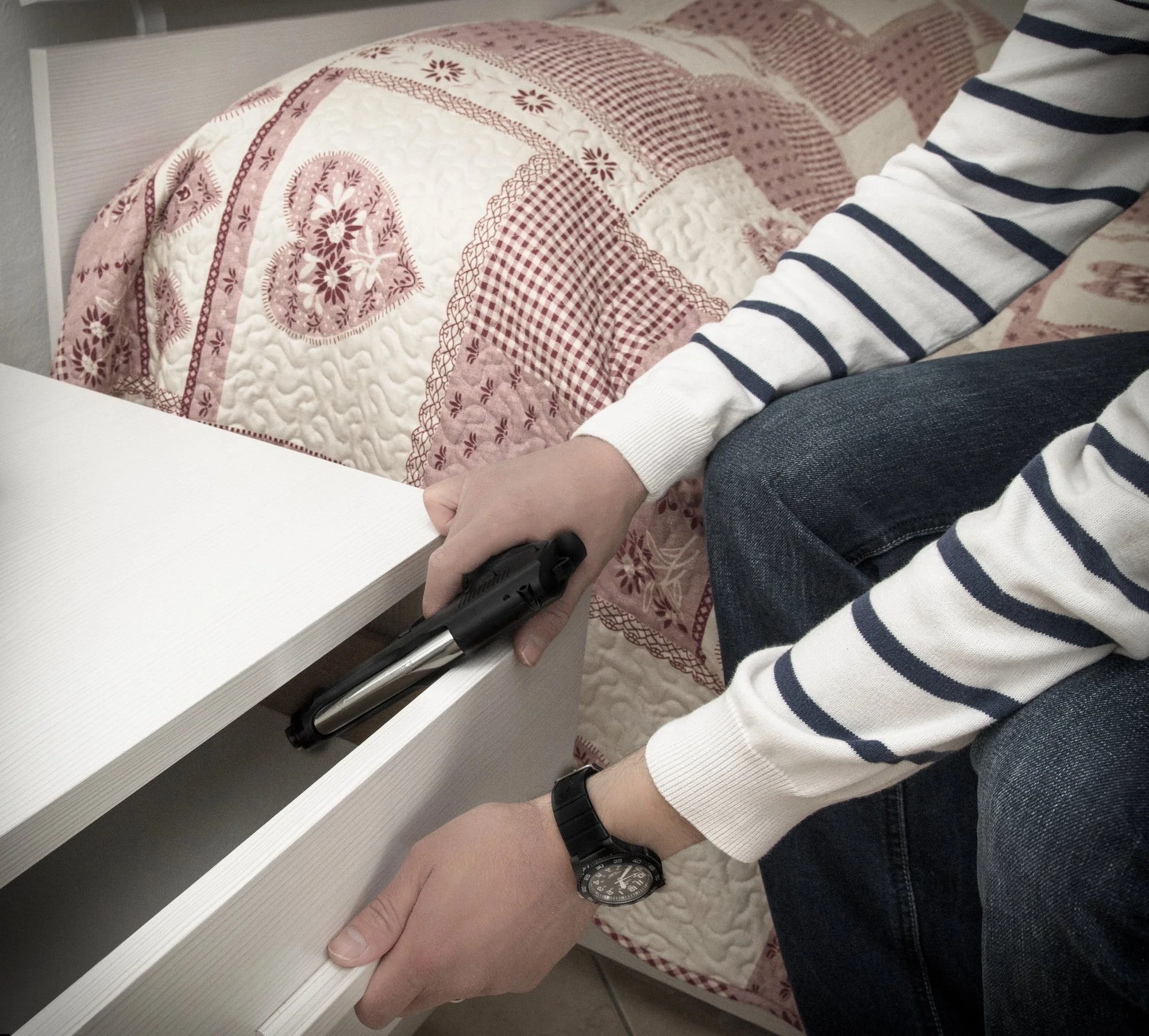
When something goes “bump” at 2 a.m., you won’t have time to Google what to do. Your heart rate spikes, your hands shake, and your brain has to make fast decisions with incomplete information.
That’s why home defense for real people isn’t about being tactical 24/7—it’s about having a simple plan that works under stress, fits your life, and keeps you both alive and out of jail.
Let’s break this down into three realities: why 911 isn’t enough, how to build a practical home-defense plan, and how the law views your use of force in Virginia, Maryland, and D.C.
911 is not your first line of defense
Calling 911 is essential—but it is not a force field.
Police are reactive by design. Even in a “good” response, help is often minutes away, while violence happens in seconds. Your first line of defense is what you do in that gap: your mindset, your preparation, and your immediate actions.
Think of your home defense as layers, not just a gun in the nightstand:
Deterrence & delay: good locks, reinforced doors, lighting, visible cameras, and a dog all increase the chance a criminal picks another target.
Early warning: door/window sensors, a monitored alarm, baby monitors, motion lights—anything that lets you know sooner that someone is where they shouldn’t be.
Communication: charged phones, a rehearsed 911 script, and simple family code words (“SAFE ROOM,” “CALL 911”) reduce confusion when adrenaline hits.
Protection & medical: a lawfully owned defensive firearm (if that’s part of your plan), plus basic medical gear like a tourniquet and pressure bandages.
The goal in those first chaotic seconds is not to “win the gunfight.” Your goal is to:
Buy time, get behind cover, control your family, and survive until help arrives.
That’s a very different mindset from “I’ll clear the house like a SWAT team.” Most real people should be defending from a position of advantage, not hunting the intruder through dark hallways.
Creating a home defense plan that works
A good plan is simple, repeatable, and matched to your actual house and family, not something copied from a movie clip.
1. Define your mission
Your mission is not “kill the bad guy.”
Your mission is:
Protect my loved ones, avoid unnecessary confrontation, and only use force when absolutely necessary and legally justified.
That mindset steers everything that follows—how you move, what you say to 911, whether you chase someone outside, etc.
2. Map your home and define “safe zones”
Walk around your house in the daytime with a notebook:
Identify sleeping areas, choke points, and fatal funnels (narrow halls, doorways).
Pick a primary safe room (often the master bedroom) with:
A solid-core door and a good lock
A bed or furniture you can use as partial cover
A clear angle to the door with a safe backstop (wall that doesn’t point toward kids’ rooms or neighbors)
A phone, charger, and small medical kit
Teach family members: “If something happens, your job is to get to the safe room and stay behind the bed/desk until I say otherwise or police arrive.”
3. Build layered security, not just “I have a gun”
Outside the home:
Motion lights at entrances and dark corners
Trimmed bushes near windows (harder to hide behind)
Cameras or video doorbells
Visible “alarm monitored” signage (even if your system is simple)
Doors and windows:
Long screws in strike plates and hinges
Quality deadbolts & door hardware
Window locks and, where appropriate, secondary stopping devices
Inside the home:
Simple alarm or chime on exterior doors
Bedroom door locks
A small, easily accessible light near your bed
Each layer buys time—which is the real currency of survival.
4. Stage defensive tools responsibly
If firearms are part of your plan, balance accessibility with safe storage:
Use quick-access safes in the bedroom and/or safe room.
Keep a white light on or near the defensive firearm for target identification.
Store magazines loaded but safely secured.
Consider overpenetration: choose ammunition appropriate for home defense, and understand what’s behind your intended line of fire (kids’ rooms, neighbors, thin walls).
Non-firearm tools matter too:
Flashlights (not just phone lights)
Door wedges you can kick under the bedroom door
Medical gear: tourniquet, gauze, pressure bandages
5. Rehearse simple, realistic drills
You don’t have to turn your living room into a kill house—but you do need reps.
Run low-key “what if” drills with your family:
Trigger event: “We hear glass break near the back door.”
Adult 1 grabs phone + defensive tool, moves to preplanned position covering the door to the bedroom or hallway.
Adult 2 gathers kids and moves them to the safe room.
Adult 1 or 2 calls 911 using a simple script: “We have a possible break-in at [address]. We are in the bedroom. I am armed. Send police and EMS. I will stay on the line.”
Lights on/off rehearsals: Practice working with lights off, using a flashlight from cover instead of walking toward noises with every light on.
Keep the plan short enough to remember under stress. Think in bullet points, not paragraphs.
Legal use of force in VA, MD, and DC
Important: The information below is for general education only, not legal advice. Laws change, and how they apply can depend heavily on specific facts. Always confirm details with a qualified attorney in your jurisdiction.
A useful framework everywhere is:
Is there an imminent threat of death or serious bodily injury?
Is your belief reasonable under the circumstances?
Are you using no more force than necessary to stop that threat?
Did you provoke or escalate the situation?
Where VA, MD, and DC differ is in the duty to retreat and how “castle doctrine” applies.
Virginia
Virginia doesn’t have a broad statutory “stand your ground” law, but case law recognizes a form of the castle doctrine:
In your home: You generally have no duty to retreat before using force, including deadly force, if you reasonably believe an intruder intends to cause death or serious bodily harm after unlawful entry.The Wilson Law Firm+2GIFFORDS+2
Outside the home: The expectation is that you avoid or break contact if you can do so safely; using deadly force when you could have safely disengaged can get you in serious legal trouble.Moheb Legal Defense, PLLC
Property alone is not enough. You generally cannot use deadly force solely to protect property; the key is imminent threat to people.
Practically, that means:
You’re on stronger legal ground defending from a position inside your home than chasing someone into the yard or street.
Once the threat is clearly fleeing and no longer a danger, your justification for deadly force usually evaporates.
Maryland
Maryland is a duty-to-retreat state in most public situations, but it also recognizes a castle doctrine inside the home:
In public: Before using deadly force, you usually must retreat if you can do so safely.Wikipedia+1
In your home: There is no duty to retreat when facing an unlawful intruder in your dwelling. Maryland case law and state materials confirm that individuals may use deadly force in self-defense in their home if they reasonably believe it’s necessary to prevent serious harm or death.GIFFORDS+4Wikipedia+4Maryland State Police+4
The force used must still be reasonable and proportional. Excessive or vindictive force can still result in criminal charges or civil liability.Carey Law Office+1
Maryland also has limited civil immunity protections for people who lawfully use force, including deadly force, to defend their home or business—though those protections are not absolute.Wikipedia+1
District of Columbia (DC)
DC generally leans more restrictive, with a duty to retreat outside the home when safe to do so, but some recognition of “castle-style” protections in the home:
In public: DC law typically expects you to retreat from a threat, if you reasonably can, before resorting to deadly force.FindLaw
In your home or business: Several legal sources and jury-instruction style materials indicate that, as in many duty-to-retreat jurisdictions, there is no duty to retreat when you are violently attacked in your own dwelling or place of business—this is the core of the castle doctrine principle.MPDC+2GIFFORDS+2
DC courts have also noted limits—for example, the castle doctrine may not justify deadly force against a co-occupant in certain circumstances.Markham Law Firm
For all three jurisdictions, a few practical legal guardrails:
Don’t go looking for a fight—defend, don’t pursue.
Once the threat is clearly over (intruder flees, no longer armed/presenting danger), your justification for force drops fast.
After an incident, call 911, identify yourself, request police and EMS, and then invoke your right to counsel before giving detailed statements.
Summary
Carrying a firearm daily is a serious responsibility—and for new gun owners, it often brings uncertainty, hesitation, and fear. This article guides readers through the mindset shift required to move from nervous new carrier to confident protector. It highlights how daily safety habits, mental preparedness, and a structured CCW class like our Thursday Night session help eliminate guesswork and anxiety. With the right foundation, everyday carry can become a safe, seamless part of your life.
TTP Breakdown
Tactical Objective:
Defend your home legally and effectively.
Techniques:
Scenario planning, layered defense, legal understanding.
Procedures:
Map your home layout and define safe zones.
Identify and legally store access-ready firearms.
Rehearse drills and communication plans with family.